
Metal sources

Metal exposure

The testing panels offered by MELISA laboratories have been devised to include the most commonly found allergy-causing metals in various metal alloys used in dentistry and surgery. Below you will find an overview of metals found in frequently used dental and orthopaedic restorations as well as an overview of metals present in our environment.

Laboratories offer different testing panels to help doctors and patients choose what to test. Typically, the choice of panels for testing will be based on the patient’s current exposure. Patients should contact their health care provider to find out the exact composition of their fillings, crowns, wires, pins and/or implants.

  • Dental restorations

    Various materials are used to manufacture fillings, crowns, pins, root-fillings, implants etc. Below are listed metals commonly present in dental restorations. Information about the exact type of restoration used should be included in the patient’s medical record.

    Amalgam/silver fillings: copper, mercury, nickel, silver, tin
    Crowns non noble: beryllium, cobalt, chromium, manganese, molybdenum, nickel, tungsten
    Crowns noble: gallium, gold, indium, iridium, palladium, platinum, ruthenium, silver
    Titanium implants: aluminium, titanium, vanadium, nickel (traces)

  • Orthopedic and body implants

    Various alloys are used to manufacture hip and knee replacements, spinal implants, plates, screws, nails, pins, clips etc. Below are listed commonly used alloys and their typical compositions. Information about the exact type of implant used during surgery should be included in the patient’s medical record.

    Stainless steel: chromium, manganese, molybdenum, nickel, tungsten
    Cobalt-Chromium alloys: cobalt, chromium, manganese, molybdenum, nickel, tungsten
    Titanium (Ti-6Al-4V): aluminium, titanium, vanadium, nickel (traces)
    Nitinol: nickel, titanium
    Oxinium: niobium, zirconium (oxidized), chromium (traces),  tin (traces)

  • Food

    Foods from contaminated areas may contain more metals than others, whether fish, meat, vegetables or fruit.
    Fish can contain high amounts of methyl mercury, which accumulates up in the food chain so that large predatory fish contain more mercury than smaller fish.
    Seafood may contain mercury, cadmium and arsenic.
    Vegetables from polluted areas may contain cadmium, palladium, lead etc.
    Tinned food can contain tin and aluminium.
    Wine can contain molybdenum, nickel and lead.
    Nickel is found in bananas, cocoa, oatmeal, green vegetables and a variety of other foods, more details can be found HERE

  • Piercings and jewellery

    Costume jewellery may contain a lot of different metals, most notably nickel, which often cause skin rashes in sensitive patienys. Lead may also be present.
    In more expensive jewelry, yellow gold is made by mixing pure gold with copper and zinc; rose gold contains copper and white gold is an alloy of gold and some white metals such as silver and palladium. Other metals used in jewelry are platinum, rhodium, tungsten and titanium. Titanium is often used for piercings and there are some rare cases of allergy to titanium alloy piercings.

  • Medication

    Antacids contain aluminium and pills may have titanium dioxide (E171) or other metal oxides in their coating to enhance their appearance. Antiseptic preparations used to contain mercury and still do in some countries. Barium is found in x-ray fluids.

  • Cosmetics

    Titanium dioxide is widely used in cosmetics, present in many products such as eye shadow, blush, nail polish, lotion, lipstick, powder and sunscreen. Metal pigments are used to give colour and act as preservatives. The following metals may exist in cosmetic products: lead, mercury, chromium, aluminium, arsenic, beryllium, nickel, cadmium and others.

  • Vaccines

    May contain thimerosal (a mercury-based preservative) and aluminium.

  • Smoking

    Both active and passive smoking contain mercury, nickel, cadmium and, manganese.

  • Occupational exposure

    Construction workers, miners, electricians, rubber/wood/paper/textile industry workers, dentists, hairdressers and painters are some occupations that are more exposed to metals in their work than others.

  • Residential exposure

    Living close to a highway, airport, crematory or factory or, for example, in the same building as a dental clinic may lead to increased exposure to metals such as palladium, cadmium, lead and mercury.

  • Title: Metal exposure
  • Subtitle: Melisa
  • Intro text editor:

    The testing panels offered by MELISA laboratories have been devised to include the most commonly found allergy-causing metals in various metal alloys used in dentistry and surgery. Below you will find an overview of substances recommended for MELISA testing based on the composition of frequently used dental and orthopaedic restorations as well as an overview of metals present in our environment.

    Laboratories offer a variety of testing panels to help doctors and patients choose suitable tests. Find an example of testing panels HERE.
    Typically, the choice of panels for testing will be based on the patient’s current exposure. Patients should contact their healthcare provider to find out the exact composition of their fillings, crowns, wires, pins, implants, devices etc.

    Due to the manufacturing process, traces of various metals may be present in most materials/alloys used in dentistry and orthopedics. Trace quantities of more allergenic metals such as Nickel and Cobalt may seemingly initiate an allergic reaction in someone sensitised to the metals.

    Note that MELISA does not detect sensitivity to the alloyed material but sensitivity to individual components of the alloy.

  • Section title: Common sources of metal exposure
  • List item:
    • List title: Dental restorations, List text:

      Various materials are used to manufacture fillings, crowns, pins, root-fillings, implants etc. Below you will find an overview of recommended substances for testing. Information about the exact type of restoration used should be included in the patient’s medical record.

      Amalgam/silver fillings: Copper, Inorganic mercury, Silver, Tin, Nickel (traces)
      Non-noble crowns (bridges): Aluminium, Beryllium, Copper, Cobalt, Chromium, Manganese, Molybdenum, Nickel, Niobium, Tantalum, Tungsten
      Noble crowns (bridges): Copper, Gallium, Gold, Indium, Iridium, Palladium, Platinum, Ruthenium, Silver, Tin
      Titanium implants (Ti-6Al-4V alloy)Aluminum, Titanium dioxide, Titanium sulphate, Vanadium, Nickel (traces)

      , List image:
    • List title: Orthopedic and body implants, List text:

      Various alloys are used to manufacture hip and knee replacements, spinal implants, plates, screws, nails, pins, clips etc. Below are listed commonly used alloys and their typical compositions. Information about the exact type of implant used during surgery should be included in the patient’s medical record.

      Stainless steel: Chromium, Manganese, Molybdenum, Nickel, Tungsten
      Cobalt-Chromium alloys: Chromium, Cobalt, Manganese, Molybdenum, Nickel, Tungsten
      Titanium (Ti-6Al-4V alloy): Aluminum, Titanium dioxide, Titanium sulphate, Vanadium, Nickel (traces)
      Titanium-based alloys (various alloys): Aluminium, Molybdenum, Niobium, Nickel, Tantalum, Tin, Titanium Dioxide, Titanium Sulphate, Vanadium, Zirconium, Zirconia*
      Nitinol: Nickel, Titanium Dioxide, Titanium Sulphate,
      Zirconium-based alloys: Niobium, Zirconium, Zirconia*, Chromium (traces), Tin (traces)

      , List image:
    • List title: Food, List text:

      Foods from contaminated areas may contain more metals than others, whether fish, meat, vegetables or fruit.
      Fish can contain high amounts of methyl mercury, which accumulates up in the food chain so that large predatory fish contain more mercury than smaller fish.
      Seafood may contain mercury, cadmium and arsenic.
      Vegetables from polluted areas may contain cadmium, palladium, lead etc.
      Tinned food can contain tin and aluminium.
      Wine can contain molybdenum, nickel and lead.
      Nickel is found in bananas, cocoa, oatmeal, green vegetables and a variety of other foods, more details can be found HERE

      , List image:
    • List title: Cosmetics, List text:

      Titanium dioxide is widely used in cosmetics, present in many products such as eye shadow, blush, nail polish, lotion, lipstick, powder and sunscreen. Metal pigments are used to give colour and act as preservatives. The following metals may exist in cosmetic products: lead, mercury, chromium, aluminium, arsenic, beryllium, nickel, cadmium and others.

      , List image:
    • List title: Medication, List text:

      Antacids contain aluminium and pills may have titanium dioxide (E171) or other metal oxides in their coating to enhance their appearance. Antiseptic preparations used to contain mercury and still do in some countries. Barium is found in x-ray fluids.

      , List image:
    • List title: Vaccines, List text:

      May contain thimerosal (a mercury-based preservative) and aluminium.

      , List image:
    • List title: Smoking, List text:

      Both active and passive smoking contain mercury, nickel, cadmium and, manganese.

      , List image:
    • List title: Piercings and jewellery, List text:

      Costume jewellery may contain a lot of different metals, most notably nickel, which often cause skin rashes in sensitive patienys. Lead may also be present.
      In more expensive jewelry, yellow gold is made by mixing pure gold with copper and zinc; rose gold contains copper and white gold is an alloy of gold and some white metals such as silver and palladium. Other metals used in jewelry are platinum, rhodium, tungsten and titanium. Titanium is often used for piercings and there are some rare cases of allergy to titanium alloy piercings.

      , List image:
    • List title: Occupational exposure, List text:

      Construction workers, miners, electricians, rubber/wood/paper/textile industry workers, dentists, hairdressers and painters are some occupations that are more exposed to metals in their work than others.

      , List image:
    • List title: Residential exposure, List text:

      Living close to a highway, airport, crematory or factory or, for example, in the same building as a dental clinic may lead to increased exposure to metals such as palladium, cadmium, lead and mercury.

      , List image:
  • Image in bottom:

Layout 1 - content in two columns

FAQ

Metal sensitivity

  • What is metal hypersensitivity?

    Metal hypersensitivity is a disorder of the immune system that affects 10% to 15% of the population. In susceptible people, exposure to certain metals is followed by a cell-mediated immune reaction (type IV hypersensitivity, also called delayed-type hypersensitivity).

    A type IV hypersensitivity reaction is mediated by T-lymphocytes (white blood cells) that have had prior contact with a given allergen. These cells respond by enlarging (lymphoblast transformation) and dividing (proliferation) when exposed to the sensitizing allergen. The newly formed effector cells, together with their secreted cytokines, mediate the resulting allergic reaction.

    Inflammation activated by metal allergy may be one of the causes of ill health in patients. Type IV metal allergy is often overlooked as a culprit in many of today’s chronic illnesses (more info HERE).

  • Which symptoms may indicate metal allergy?

    The classic symptom of metal hypersensitivity is allergic contact dermatitis. In addition to local symptoms, chronic exposure to metals may cause numerous symptoms associated with an overactive immune system in susceptible people. Patients with metal hypersensitivity report symptoms such as inflammation, joint and muscle pain, cognitive impairment (brain fog), depression, and headaches. Metal hypersensitivity has been implicated in the aetiology of chronic fatigue syndrome (CFS), multiple sclerosis (MS), fibromyalgia and multiple chemical sensitivity (MCS).

  • Which metals cause allergy?

    The most frequently allergenic metal are nickel, gold, palladium, cadmium, various mercury compounds, cobalt and chromium. Occasionally, other metals can induce positive responses in MELISA, e.g. beryllium, titanium, tin, platinum and copper.
  • Where can metals be found?

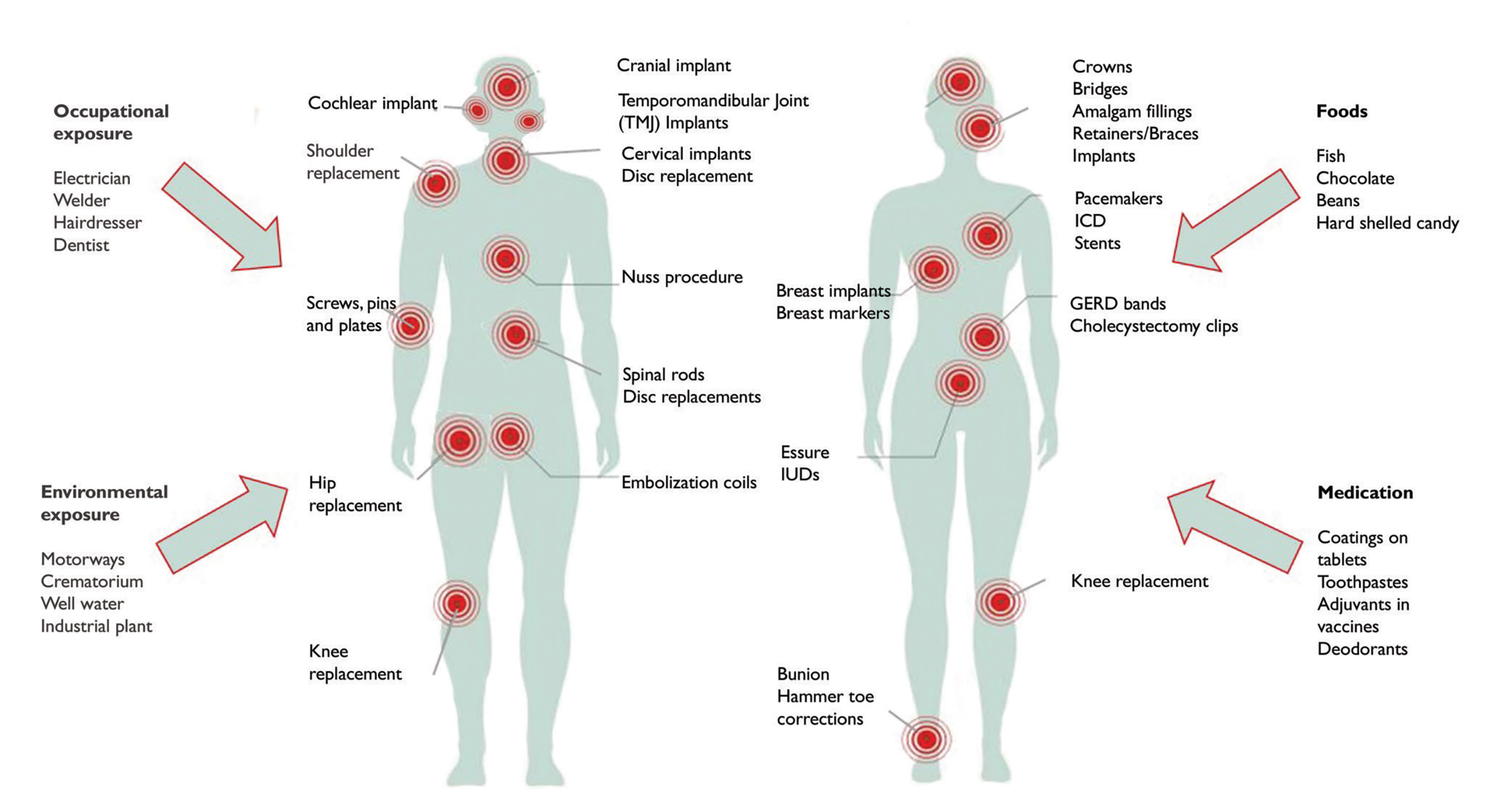
    Dental restorations - fillings, crowns, implants and braces Orthopaedic devices - knee and hip replacements, pins and plates Cardio and Vascular - embolization coils, stents, septal occluders, implanted defibrillators and pacemakers Environmental - jewellery, cell phones, coins, certain foods and medications etc. A detailed overview of metals found in frequently used dental and orthopaedic restorations as well as an overview of metals present in our environment could be found HERE.
  • In which fields of medicine does a metal allergy play an important role?

    General medicine, dentistry, allergology, occupational medicine, orthopedic surgery, dermatology, internal medicine, pediatrics, and environmental medicine.
  • How can a metal allergy be diagnosed?

    With a skin test or, more objectively and safely, with the MELISA test.

get tested

MELISA in the EU


Patient

Order test kit


More Articles …